Optimising BBC GoodFood App Search Filters

Redesigning the GoodFood app search experience to surface filters earlier, reduce friction and improve recipe discovery.
Project details

Team

Kanza Leghari

Snr Product Designer

Joe F.

Snr Product Designer

Richard Y.

Snr Software Engineer

Software Engineers

Platforms & Softwares

UserZoom

User research

Figma

Design & Prototyping

Figma + Claude

Figjam

Ideation

Figma + Claude

Summary

The GoodFood app was not seeing the expected growth in daily and weekly active users two years after launch. Analysis of GA data and user behaviour suggested that the search experience was a key source of friction, with users spending longer on search results than on web and under-utilising available filters.

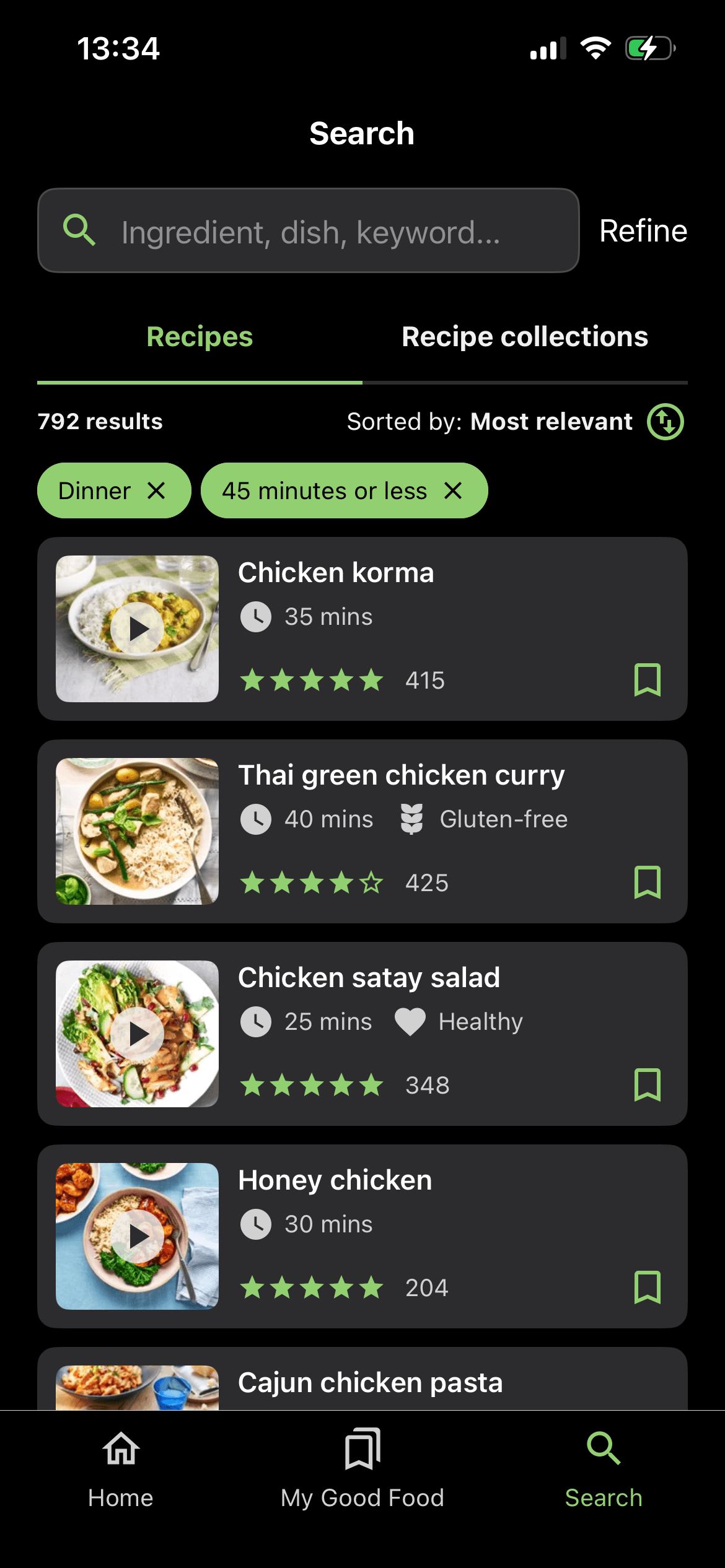
I redesigned the search experience to surface structured filters earlier, reduce the steps required to refine results, and eliminate dead-end journeys when switching between content categories.

The redesign was validated through usability testing and resulted in increased filter usage, improved engagement, and a measurable uplift in daily and weekly active users. The solution was built using scalable components that could be reused across other Immediate Apps.

The GoodFood app was not seeing the expected growth in daily and weekly active users two years after launch. Analysis of GA data and user behaviour suggested that the search experience was a key source of friction, with users spending longer on search results than on web and under-utilising available filters.

I redesigned the search experience to surface structured filters earlier, reduce the steps required to refine results, and eliminate dead-end journeys when switching between content categories.

The redesign was validated through usability testing and resulted in increased filter usage, improved engagement, and a measurable uplift in daily and weekly active users. The solution was built using scalable components that could be reused across other Immediate Apps.

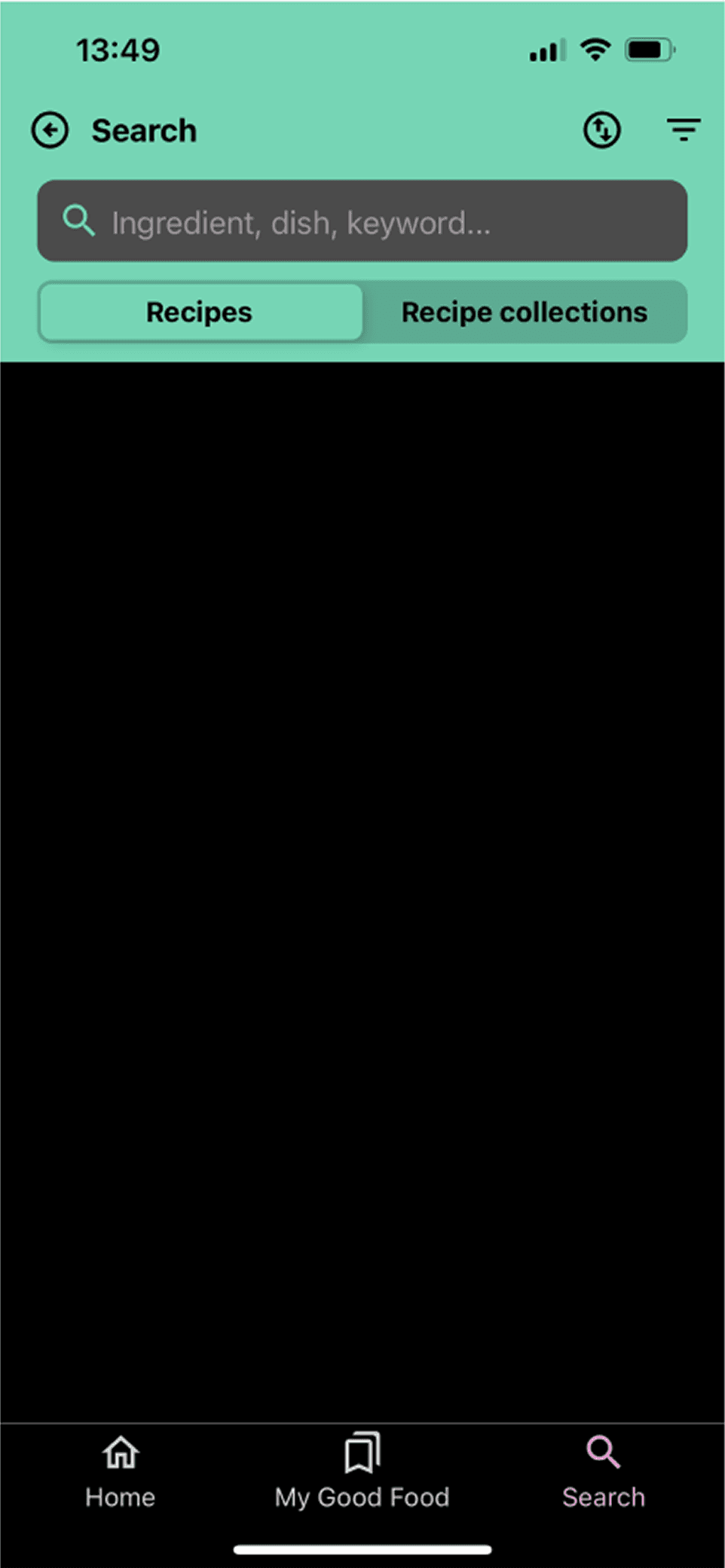
Before

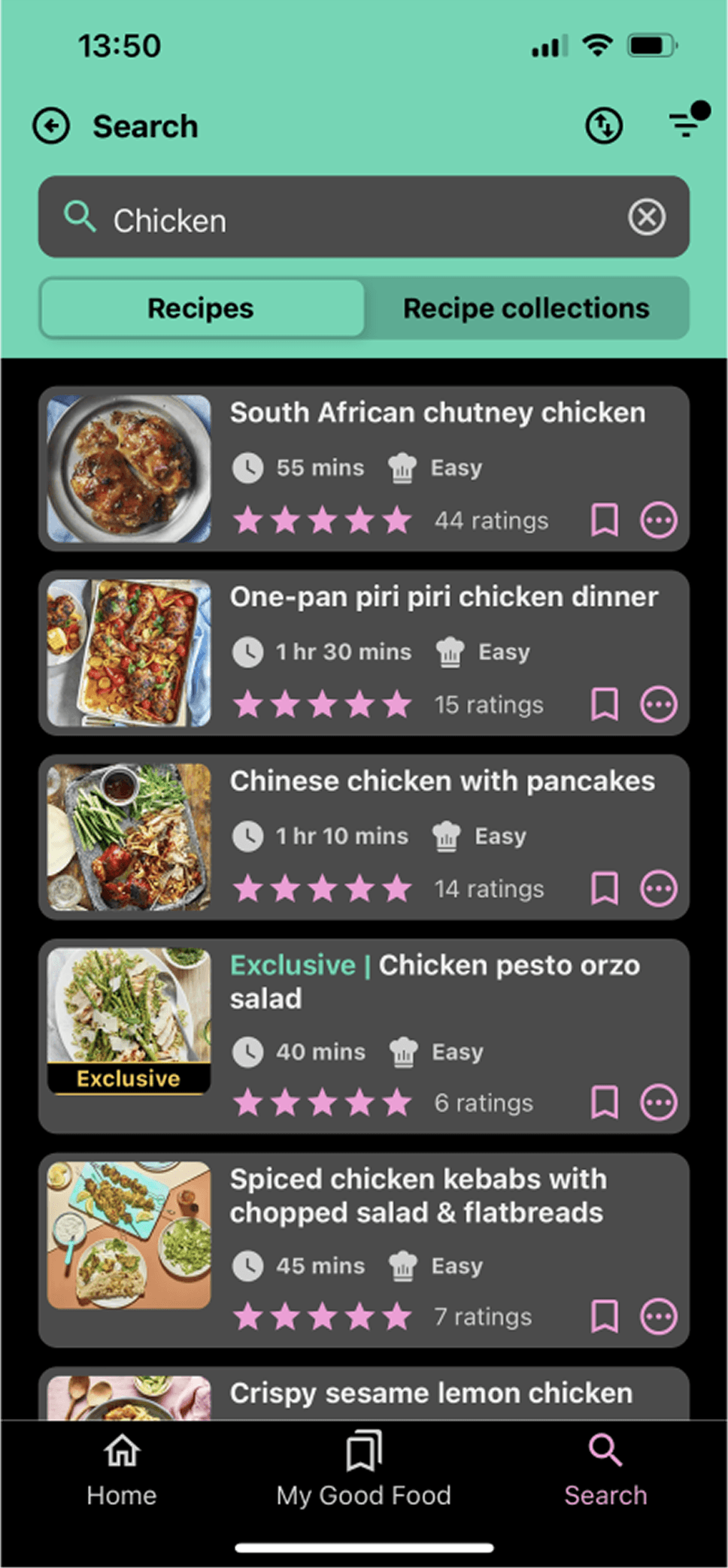
After

Before

After

16% Daily active users

Uplift in App store ratings (4.0 to 4.6 stars avg.)

Continue reading for the detailed version.

Research &
Discovery

Phase 1

User Interviews

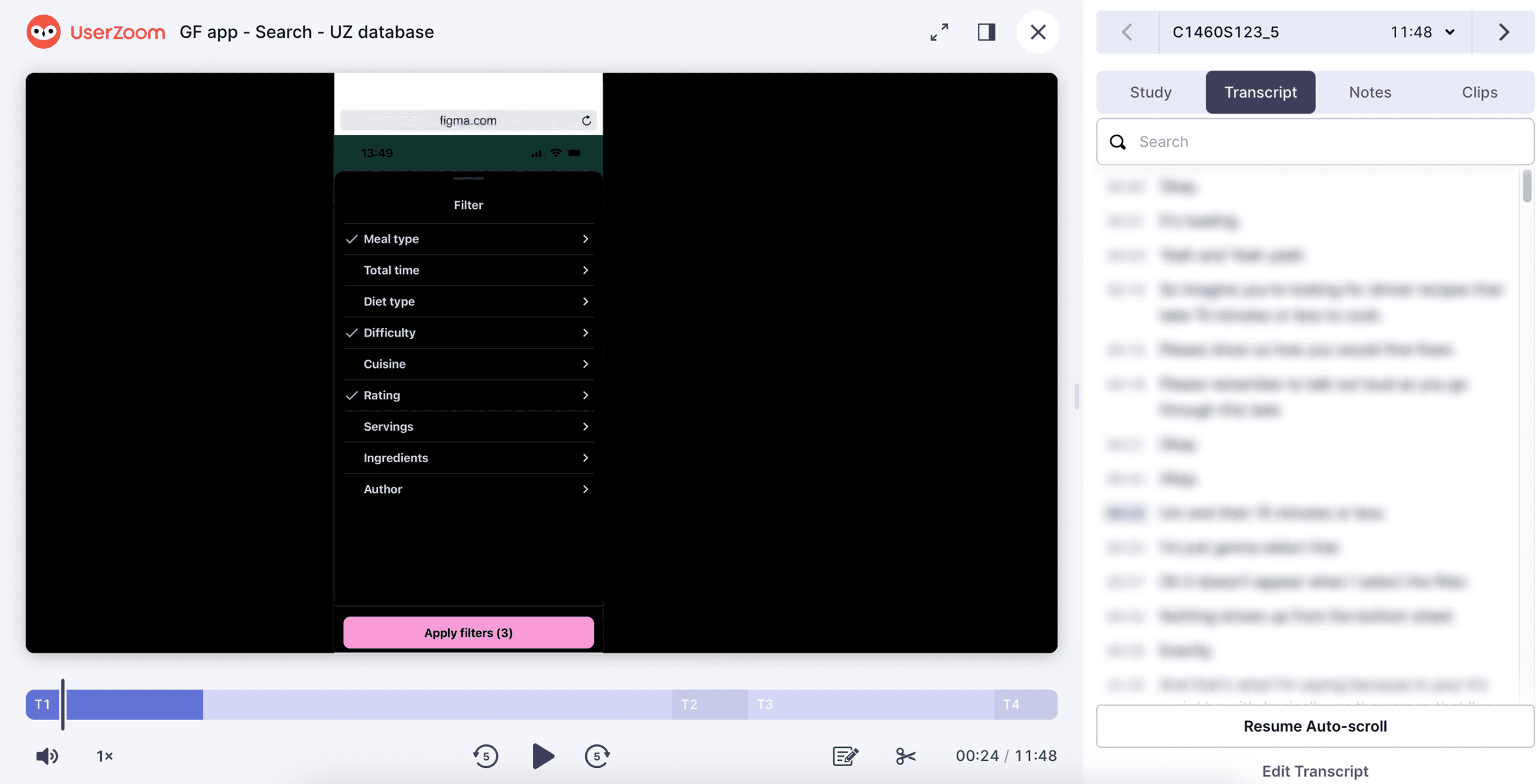
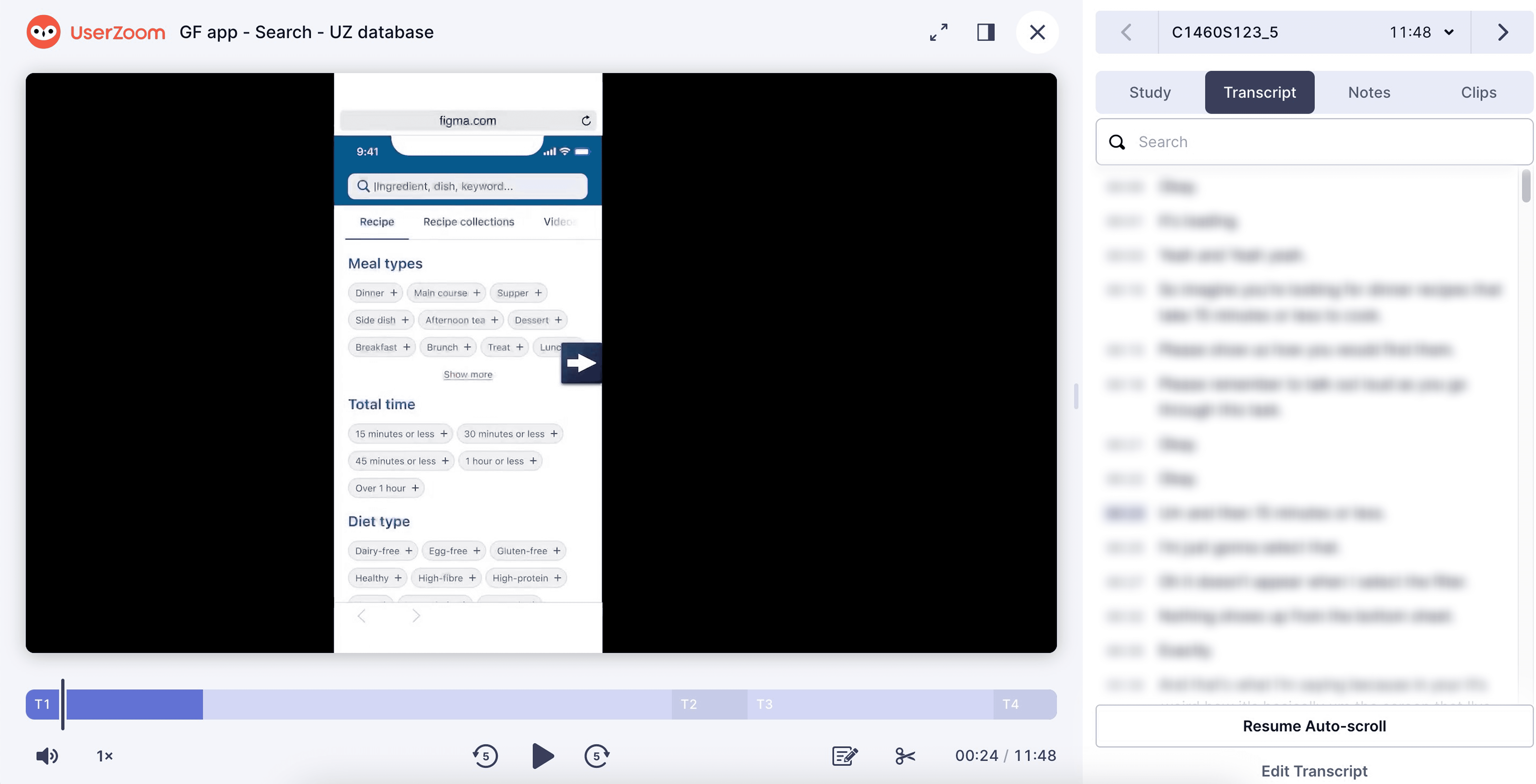
I ran a usability study with 10 participants to understand how users approached recipe discovery in the GoodFood app and where the main friction points existed. Users struggled with the blank search state, hidden filters, and inconsistent behaviour when switching between categories.

Hidden filters create friction: Users struggled to find and use filters, with multiple steps required even for simple refinements.

Blank search state slows discovery: An empty search page provided no guidance, making it harder for users to start or continue their journey.

Inconsistent behaviour breaks flow: Filters disappeared when switching categories, forcing users to restart and creating confusion.
Competitor Review

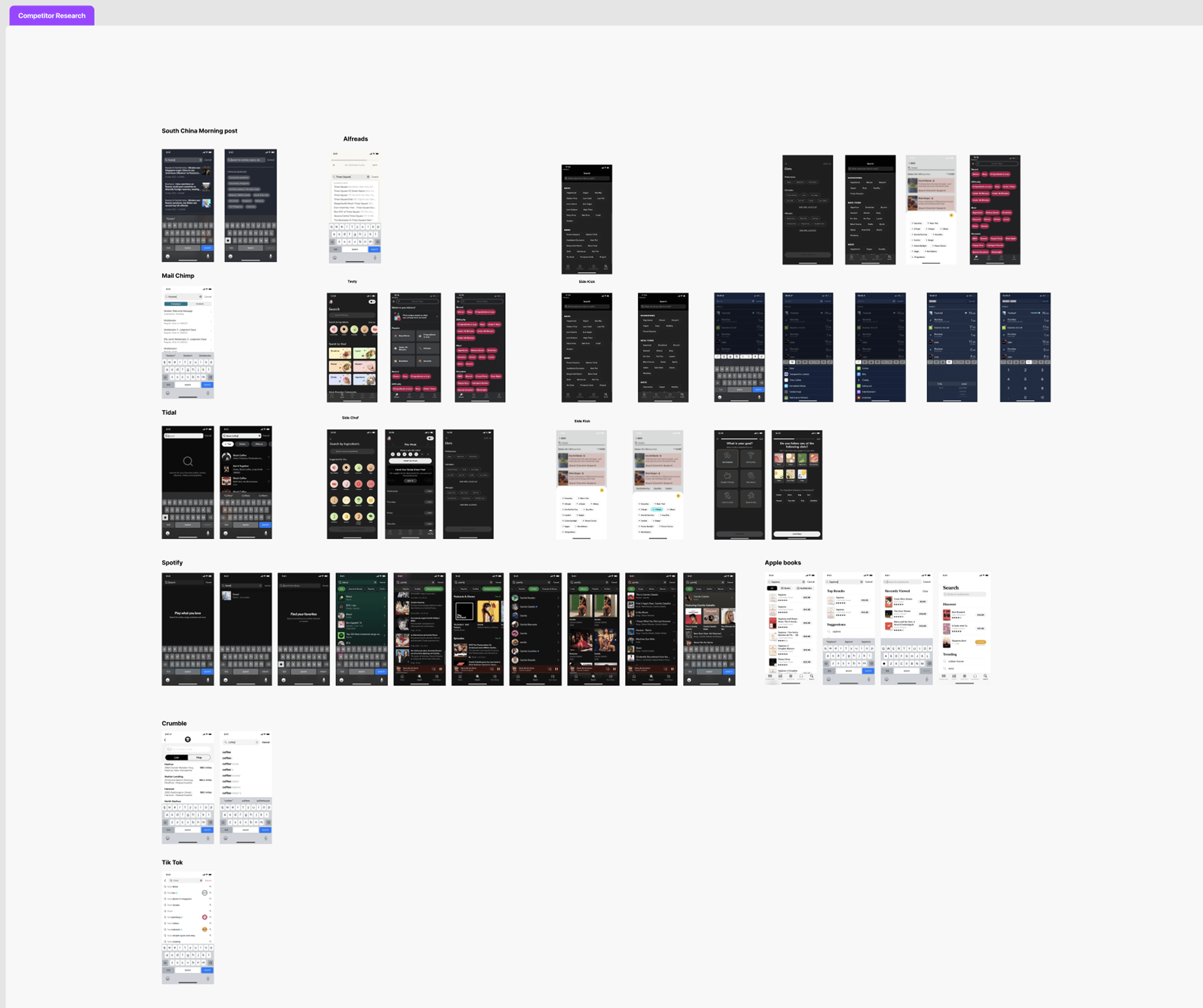
I reviewed a range of apps and websites to understand how search and discovery are typically approached. Most platforms supported filtering and sorting after a keyword search, but few leveraged structured data such as ingredients, dietary preferences or cooking time to guide users earlier in the journey.

Search experiences were largely keyword-led, requiring users to know exactly what they were looking for, with limited support for exploratory discovery. This highlighted an opportunity to surface filters upfront and use structured data to make search more focused, guided and efficient.
Design & Testing

Phase 2

Search entry and blank state
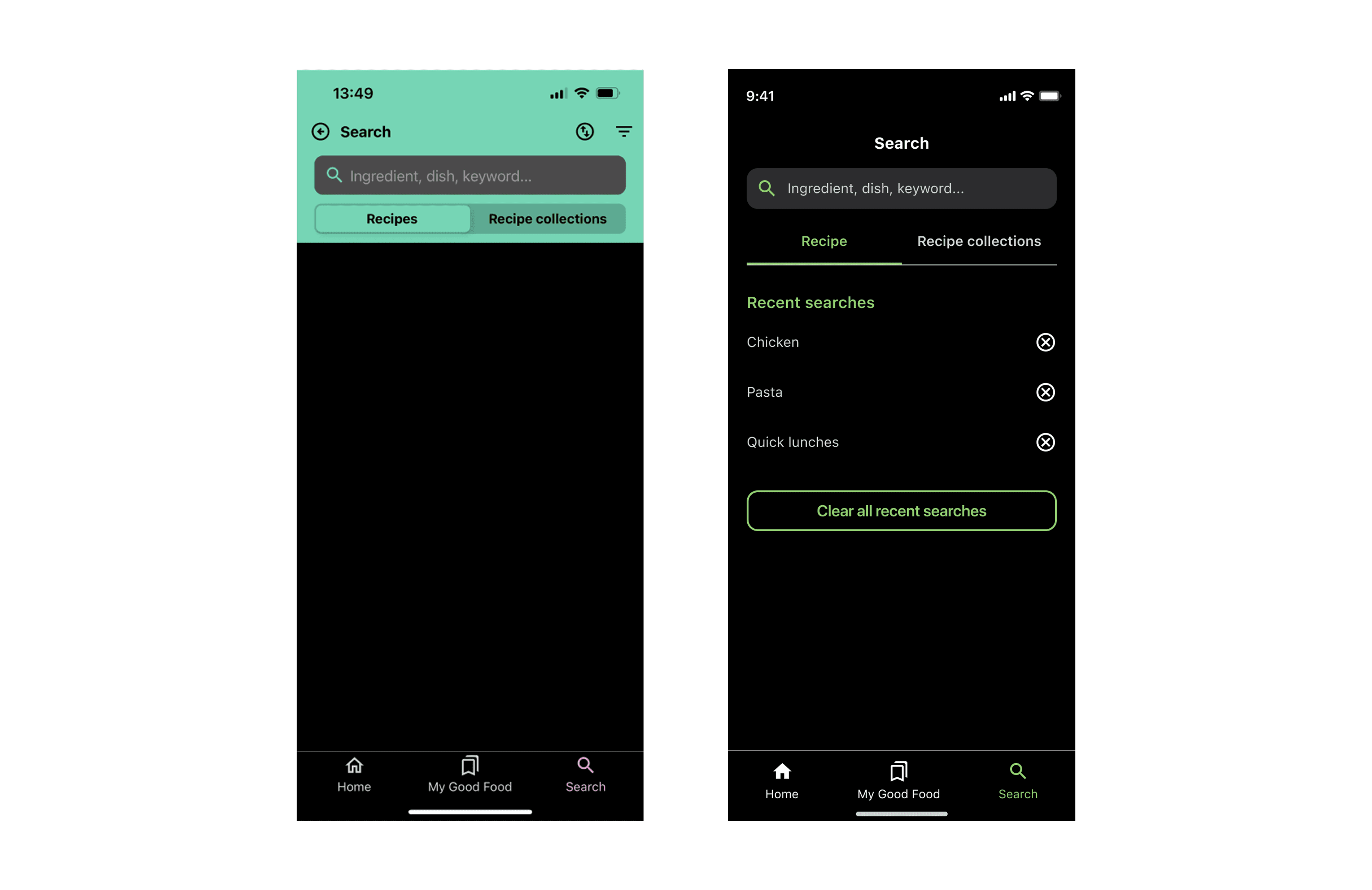
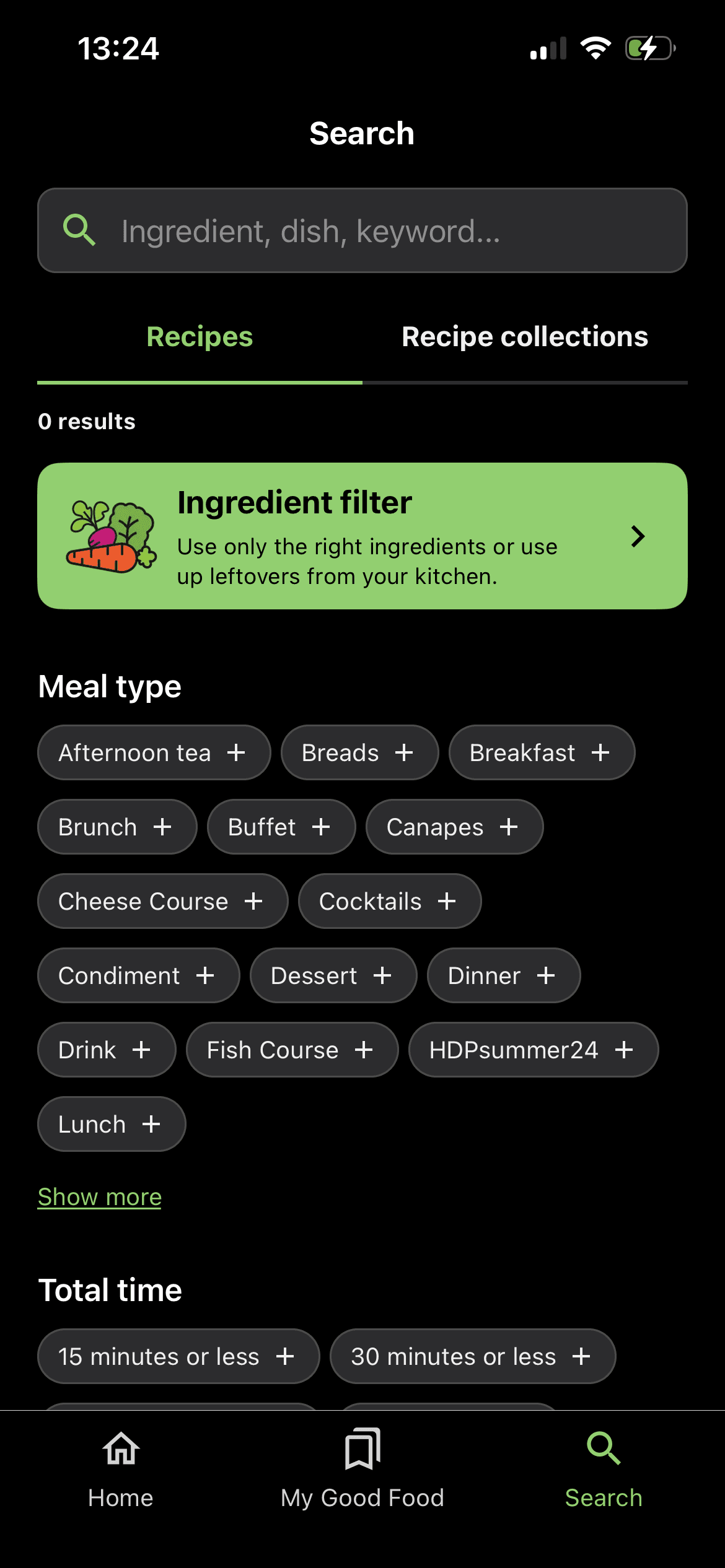
The search page lacked guidance, appearing empty and making it difficult for users to start or continue their journey. This slowed down discovery and reduced the perceived usefulness of the feature.

I introduced recent searches (when a user started with a keyword) to prompt users back into familiar journeys and provide a more guided entry point into search, reducing the effort required to restart and improving continuity.

The search page lacked guidance, appearing empty and making it difficult for users to start or continue their journey. This slowed down discovery and reduced the perceived usefulness of the feature.

I introduced recent searches (when a user started with a keyword) to prompt users back into familiar journeys and provide a more guided entry point into search, reducing the effort required to restart and improving continuity.

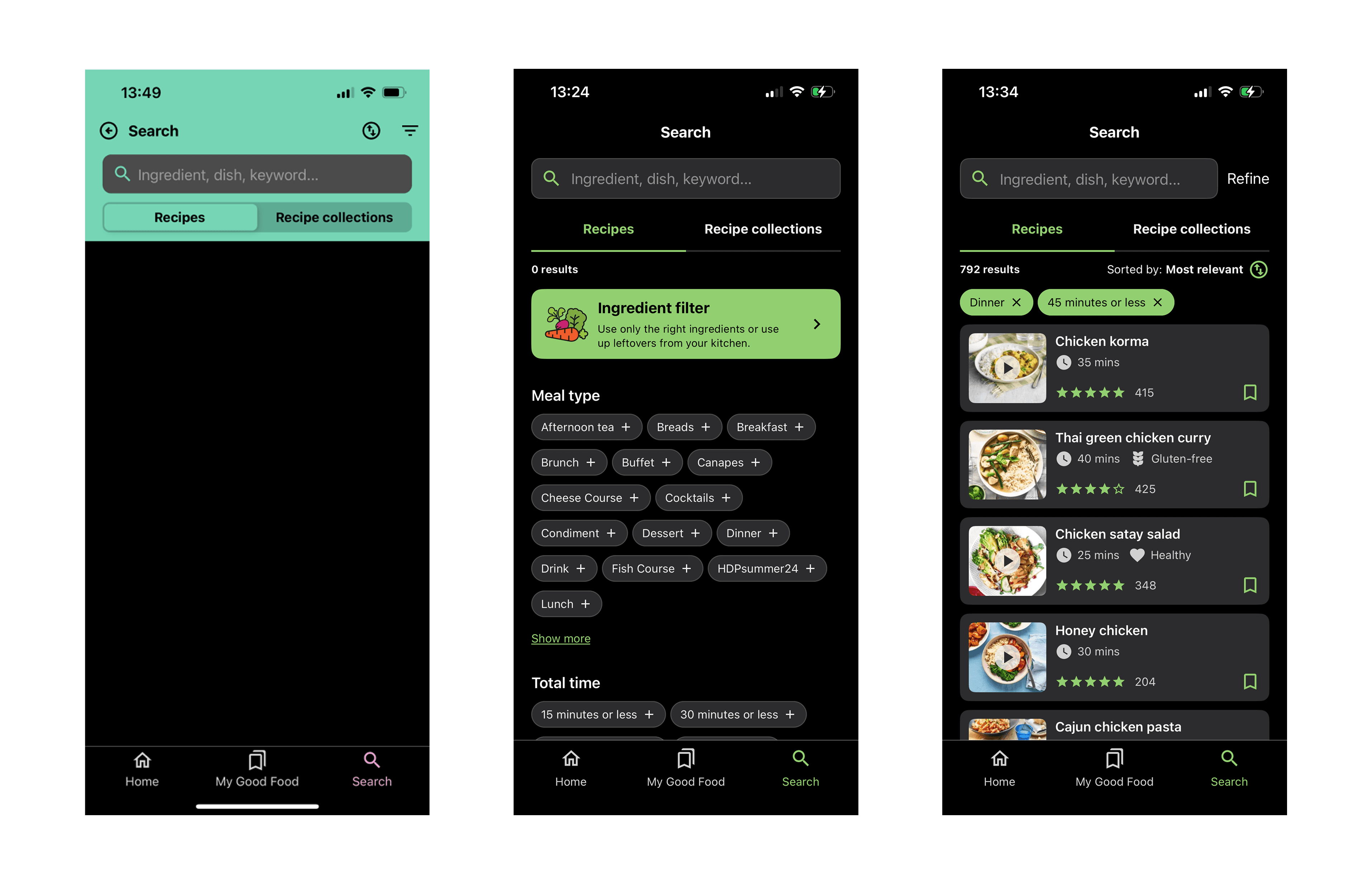
Exposing filters

Filters were hidden behind an icon and nested within an accordion, requiring multiple steps to apply even simple refinements. This created unnecessary friction and led to low filter usage despite their importance in narrowing results.

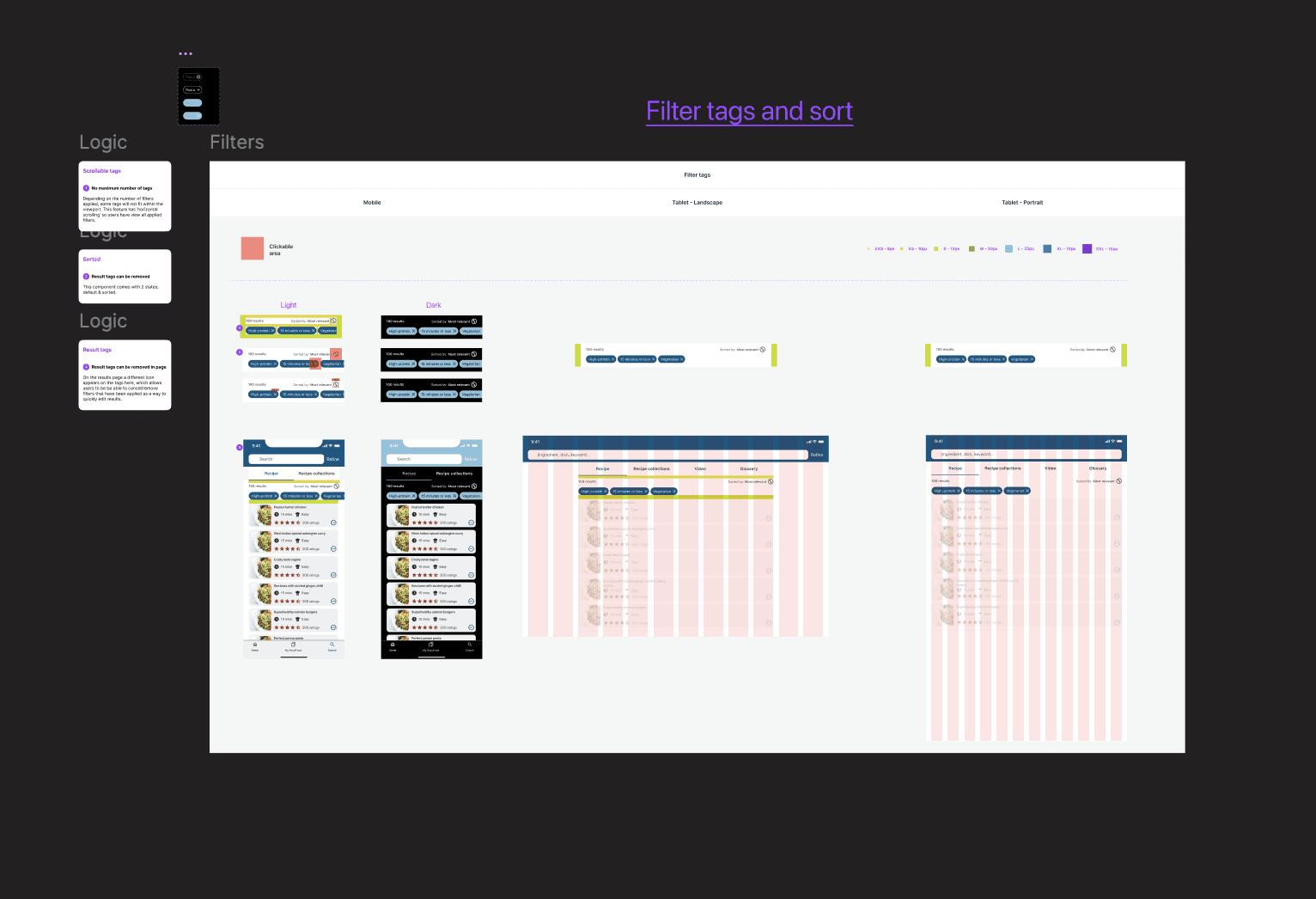
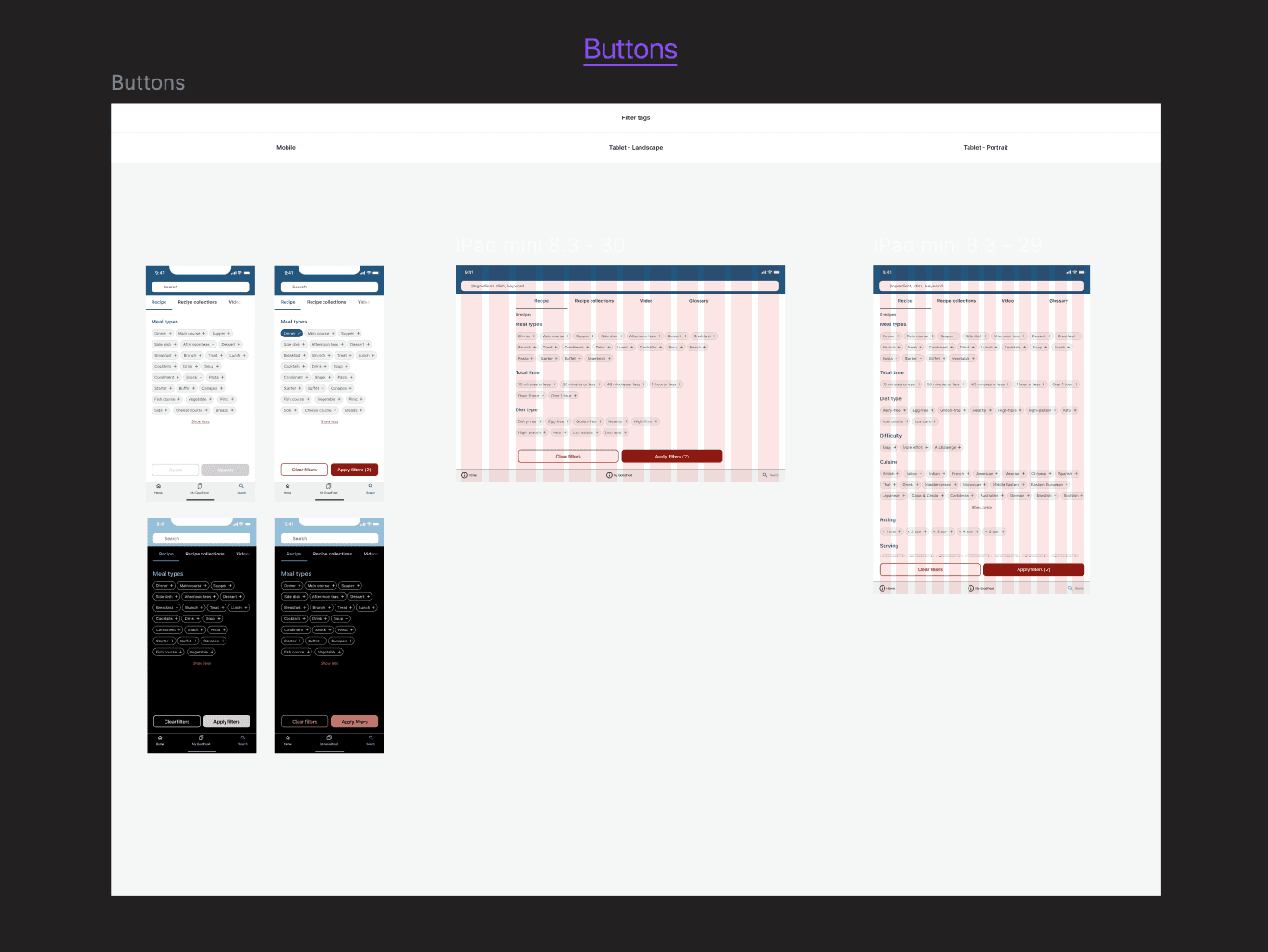
I made filters more visible and accessible by introducing a clear “Refine” entry point and exposing key filters in an interactive tab format. Filters were also ordered by result volume to guide users towards the most effective refinements and reduce time to relevant results.

I usability tested the new flows with a small cohort of users to ensure ease of navigation before finalising and creating final hi-fi specs.
Dev Handover
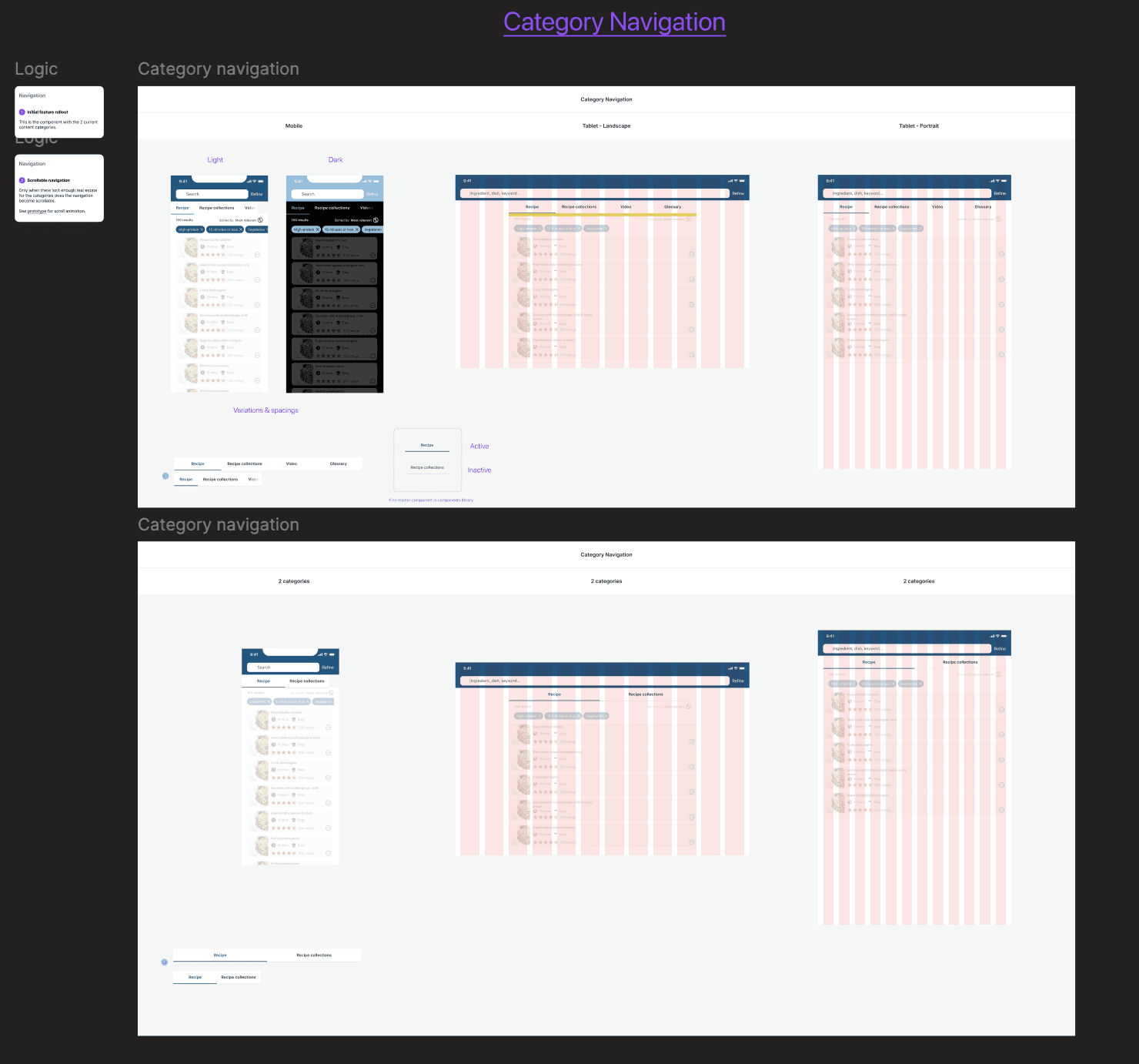
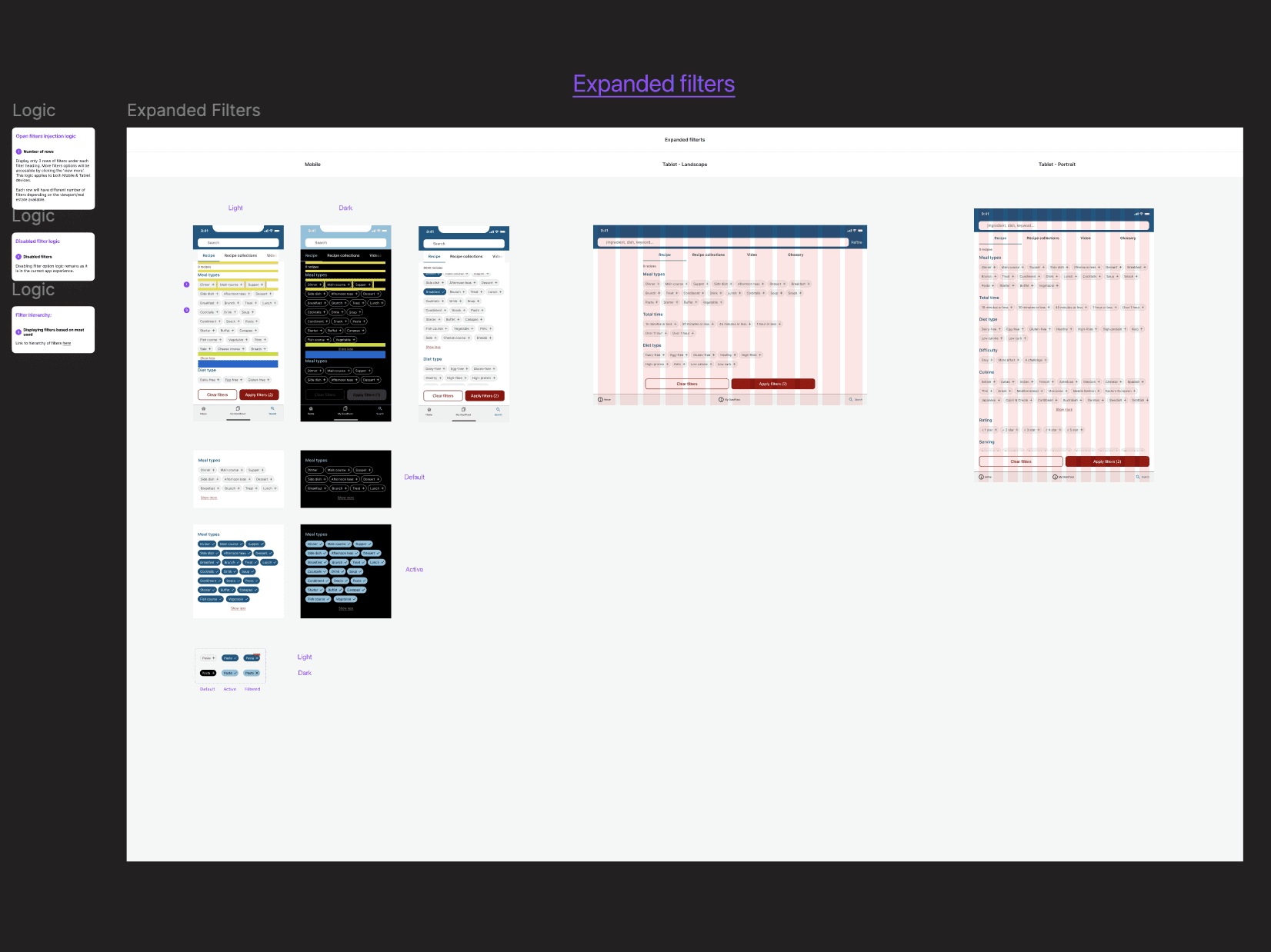
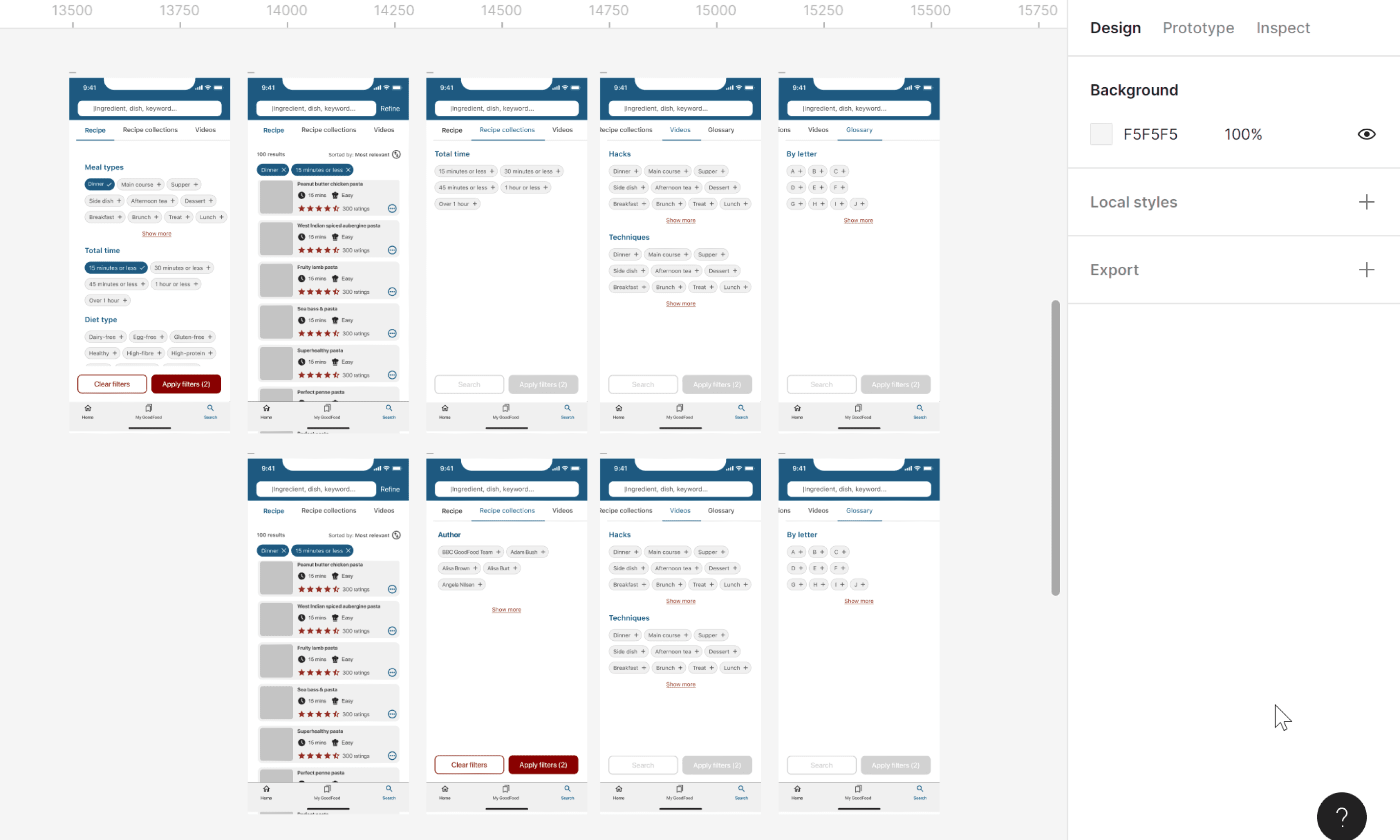
I worked closely with the development team throughout the project to ensure alignment and feasibility ahead of implementation. Final designs were delivered with detailed component specifications and annotated flows, clearly outlining interactions, states and edge cases. This enabled a smooth handover and allowed development to begin with minimal ambiguity while keeping communication open for any questions.

I worked closely with the development team throughout the project to ensure alignment and feasibility ahead of implementation. Final designs were delivered with detailed component specifications and annotated flows, clearly outlining interactions, states and edge cases. This enabled a smooth handover and allowed development to begin with minimal ambiguity while keeping communication open for any questions.

Outcomes &
Learnings

The redesigned search experience drove a strong increase in daily active users, alongside higher engagement with search and significantly increased filter usage. By reducing friction and removing dead-end journeys, users were able to find relevant recipes more quickly and with fewer steps.

The solution was built using scalable patterns that have since been rolled out across other brands, including the Radio Times app. This project highlighted the impact of improving core journeys, showing that making existing functionality more accessible and consistent can drive meaningful product and business outcomes.

The redesigned search experience drove a strong increase in daily active users, alongside higher engagement with search and significantly increased filter usage. By reducing friction and removing dead-end journeys, users were able to find relevant recipes more quickly and with fewer steps.

The solution was built using scalable patterns that have since been rolled out across other brands, including the Radio Times app. This project highlighted the impact of improving core journeys, showing that making existing functionality more accessible and consistent can drive meaningful product and business outcomes.

16% Daily active users

Uplift in App store ratings (4.0 to 4.6 stars avg.)